Zoho Books Review: Affordable Accounting Software for Singapore SMEs, Freelancers & Solo Entrepreneurs (2025)

 admin
admin
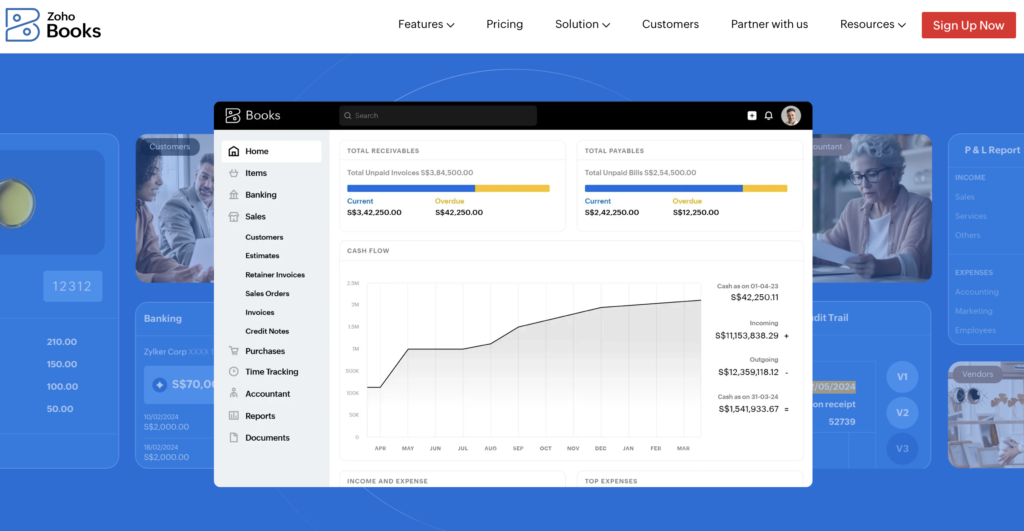
Choosing accounting software in Singapore is rarely about finding the most powerful tool — it’s about finding the right balance between affordability, ease of use, and compliance with IRAS requirements. For many small business owners, freelancers, and solo entrepreneurs, that balance is difficult to strike.
Zoho Books is often shortlisted because it promises low cost, simple accounting workflows, and Singapore-relevant features like GST handling and audit-friendly reporting — without the higher price tags of Xero or QuickBooks.
Disclosure: Some links on this page are affiliate links. This means we may earn a commission at no extra cost to you. Our reviews remain independent and honest.
This Zoho Books review Singapore is written specifically for:
- 🇸🇬 Singapore SMEs with **1–50 employees**
- 🧑💻 Freelancers, consultants, and independent professionals
- 🚀 Solo entrepreneurs managing their own books
- 👩💼 Founders who want to stay compliant without hiring a full-time accountant
- 💡 Price-sensitive but compliance-aware users
The goal of this review is not to sell you Zoho Books, but to help you decide whether it realistically fits your business size, budget, and accounting complexity in 2025.
QUICK VERDICT
Zoho Books is one of the most affordable, beginner-friendly accounting software options for Singapore freelancers, solo entrepreneurs, and small service-based SMEs that need GST support and IRAS-ready reports without enterprise-level complexity.
✅ Best for:
Freelancers, consultants, solo entrepreneurs, and small SMEs that want low-cost accounting with basic compliance needs.
❌ Not ideal for:
Larger SMEs with complex inventory, advanced reporting, or heavy reliance on local accountant ecosystems.
Overall rating: ⭐⭐⭐⭐☆ 4.2 / 5
WHAT IS ZOHO BOOKS?
Zoho Books is a cloud-based accounting software designed for small businesses and individuals to manage their finances in one place. At its core, it helps you:
- 🧾 Create and send invoices
- 💸 Track expenses and income
- 🏦 Reconcile bank transactions
- 🧮 Manage GST
- 📈 Generate financial reports for compliance and decision-making
How it fits into the Zoho ecosystem
Zoho Books is part of the larger Zoho ecosystem, which includes:
- Zoho CRM (sales and client management)
- Zoho Expense (expense claims)
- Zoho Payroll (availability varies by country)
- Zoho Inventory
- Zoho Analytics
For users already using Zoho tools, Zoho Books integrates smoothly, reducing data duplication.
Why it’s popular with small teams and individuals
Zoho Books has gained traction in Singapore because:
- 💵 Pricing is much lower than Xero and QuickBooks
- 🧑🏫 The interface is friendly for non-accountants
- 🇸🇬 GST support suits local requirements
- 🆓 A free plan exists for very small businesses
KEY FEATURES (FOR SG SMEs & INDIVIDUALS)
📋Invoicing & Estimates (Freelancer-Friendly)
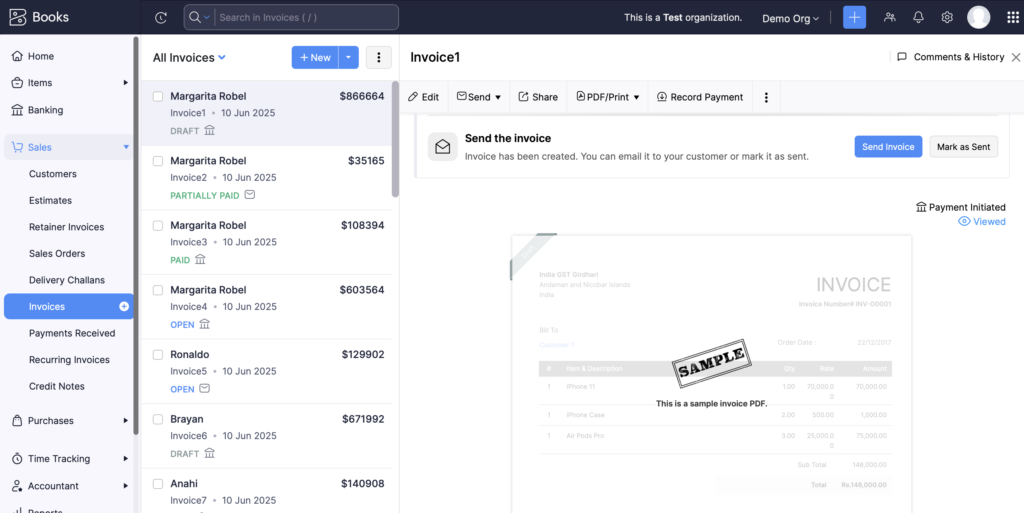
Zoho Books makes invoicing one of its strongest features:
- Customisable invoice templates
- Automatic invoice numbering
- Support for SGD and foreign currencies
- Online payment links (via supported gateways)
- Recurring invoices for retainers or monthly clients
For freelancers and consultants, this is often the primary reason to adopt Zoho Books.
📝 Expense Tracking
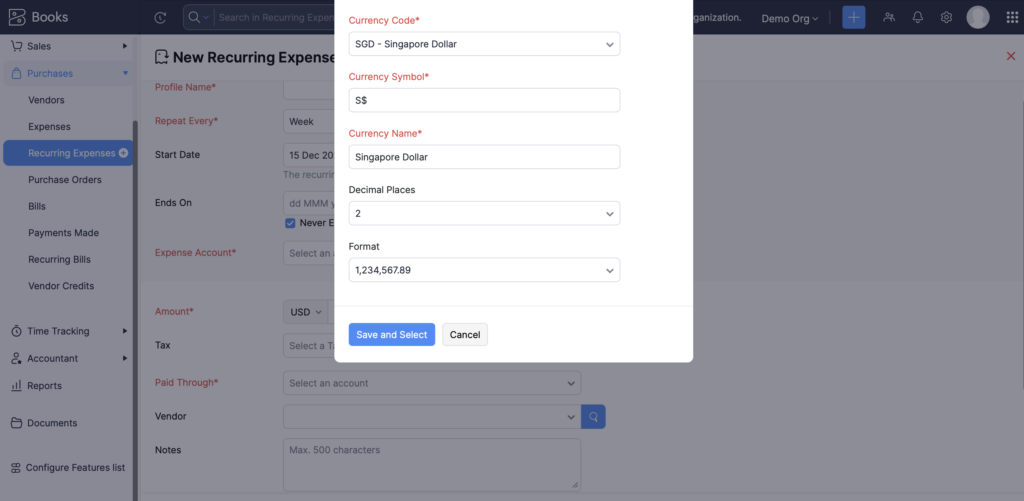
Expense management includes:
- Manual expense entry
- Receipt uploads
- Categorisation for tax reporting
- Mileage tracking (basic)
While not as advanced as dedicated expense apps, it is sufficient for small teams and solo founders.
🏛️Bank Reconciliation
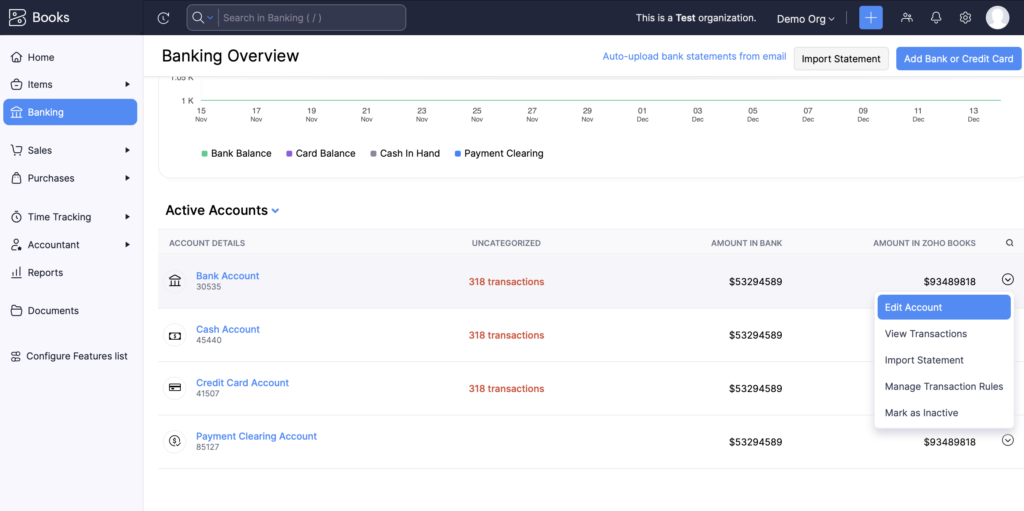
Zoho Books supports:
- Bank feed imports
- CSV uploads from Singapore banks
- Manual reconciliation
This helps reduce errors and ensures records are audit-ready, though reconciliation can still require manual review.
💲GST Handling
For GST-registered businesses:
- GST rates can be configured
- GST-inclusive and exclusive pricing supported
- GST summaries available for reporting
⚠️ Zoho Books helps track GST but does not submit GST returns for you.
📑 Basic Financial Reports for IRAS
Zoho Books provides:
- Profit & Loss statements
- Balance Sheets
- Cash Flow statements
- General Ledger
These reports are suitable for:
- Year-end reporting
- Sharing with accountants
- Supporting IRAS audits
🌍 Multi-Currency Support
This is especially important for freelancers:
- Invoice overseas clients in USD, EUR, GBP, etc.
- Automatic exchange rate handling
- Foreign currency gain/loss tracking
📌 SINGAPORE COMPLIANCE
IRAS relevance
Zoho Books is often described as IRAS-compliant, but it’s important to clarify what that means in practice.
Zoho Books:
- Helps maintain proper accounting records
- Supports GST tracking
- Generates audit-friendly financial reports
- Keeps transaction histories required by IRAS
Zoho Books does not:
- File GST returns directly to IRAS
- Replace a tax filing system or accountant
- Automatically handle corporate tax submissions
How Zoho Books supports SG accounting needs
For most small businesses, Zoho Books meets:
- Record-keeping requirements (minimum 5 years)
- GST tracking needs
- Basic reporting expectations
Limitations to be aware of
- You still need to submit GST via IRAS myTax Portal
- Complex tax planning requires an accountant
- Not tailored specifically to Singapore’s chart of accounts by default (though customisable)
⚖️ ZOHO BOOKS PRICING IN SINGAPORE
Pricing can change, so always verify on Zoho’s official site.
Typical pricing tiers
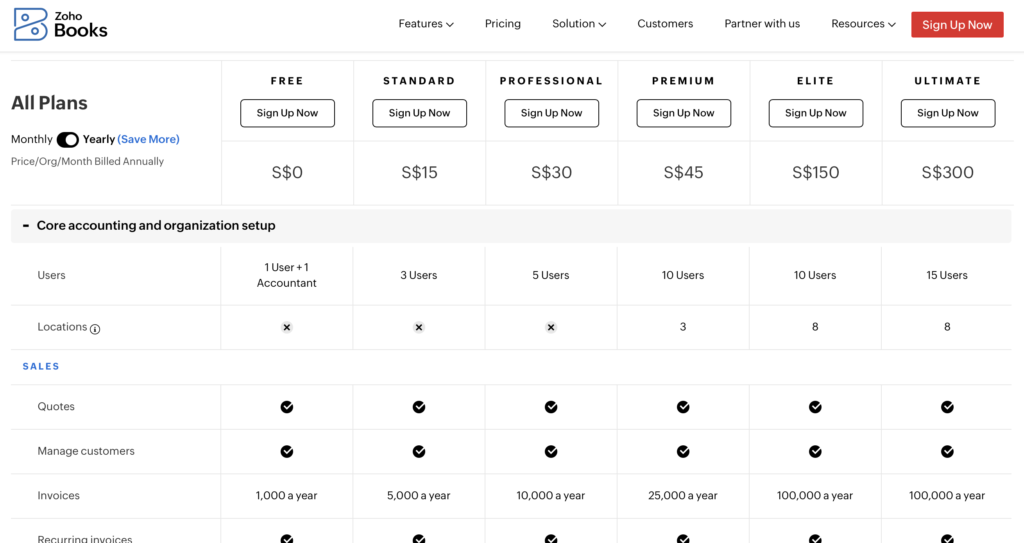
| Plan | Estimated SGD Price | Best For |
|---|---|---|
| Free | $0 | Very small businesses, solo founders |
| Standard | ~S$15–18/month | Freelancers & consultants |
| Professional | ~S$30-36/month | Growing SMEs |
| Premium / Elite / Ultimate | Higher tiers | Complex needs |
Free Plan: Who It’s Good For
The free plan is suitable if you:
- Are a solo entrepreneur
- Issue limited invoices per month
- Have simple expense tracking needs
- Are not GST-registered yet
Paid Plans: Freelancers vs SMEs
- Freelancers: Standard plan is usually sufficient
- Small SMEs (3–10 staff): Professional plan offers better reporting and automation
Value comparison vs Xero & QuickBooks
| Software | Entry Price (SGD) | Best Use Case |
|---|---|---|
| Zoho Books | Low | Price-sensitive users |
| Xero | Higher | Accountant-heavy workflows |
| QuickBooks | Medium–High | More automation |
➡️ Check current Zoho Books Singapore pricing to confirm the latest plans.
PROS AND CONS
✅ Pros
- Affordable compared to major competitors
- Beginner-friendly interface
- Good invoicing for freelancers
- GST support for Singapore
- Free plan available
- Strong Zoho ecosystem integration
❌ Cons
- Limited advanced reporting
- Inventory features are basic
- Smaller local accountant ecosystem than Xero
- Some bank feeds require manual imports
- Not ideal for complex SMEs
🚀 EASE OF USE (NON-ACCOUNTANTS)
Zoho Books is clearly designed for non-accountants:
- Clean dashboard
- Plain-language labels
- Guided setup
Setup experience
Most freelancers can:
- Create their first invoice within 30 minutes
- Import bank transactions on day one
- Generate basic reports without training
Learning curve
- Low for basic usage
- Moderate if managing GST without an accountant
- Documentation is decent but not Singapore-specific in all areas
🔗 INTEGRATIONS & ECOSYSTEM
Zoho Apps
- Zoho CRM
- Zoho Expense
- Zoho Inventory
- Zoho Analytics
Third-Party Tools (SG Common)
- Payment gateways (availability varies)
- CSV imports from local banks
- Zapier for custom workflows
Zoho Books works best if you stay within the Zoho ecosystem.
ZOHO BOOKS VS COMPETITORS (SG CONTEXT)
Zoho Books vs Xero
- 💰 Zoho Books: cheaper, simpler
- 📊 Xero: stronger reporting & accountant ecosystem
Zoho Books vs QuickBooks
- 💚 Zoho Books: better value
- 🤖 QuickBooks: more automation, higher cost
Zoho Books vs Free Accounting Software
- Zoho Books offers GST and reporting
- Free tools often lack compliance features
When Zoho Books is the better choice
- Budget is tight
- You self-manage accounting
- Business operations are simple
🎯 WHO SHOULD USE ZOHO BOOKS?
- Freelancers & consultants
- Solo entrepreneurs
- Small service-based SMEs
- Early-stage startups
🚫 WHO SHOULD NOT USE ZOHO BOOKS?
- Larger SMEs with complex reporting
- Inventory-heavy businesses
- Companies relying heavily on external accountants using Xero
🧩 REALISTIC USE CASES
Freelancer with overseas clients
- Multi-currency invoicing
- Simple expense tracking
- GST not required yet
Solo entrepreneur managing GST
- GST configuration
- Quarterly reporting
- Accountant-assisted filing
Small SME (3–10 employees)
- Invoicing
- Expense claims
- Basic financial reports
FINAL VERDICT
Zoho Books is not the most powerful accounting software in Singapore, but it is one of the most practical for small, price-conscious businesses.
- For freelancers: Excellent value and simplicity
- For solo entrepreneurs: Strong starting point with GST support
- For small SMEs: Suitable if accounting needs remain simple
➡️ Review Zoho Books pricing and features before committing.
Frequently Asked Questions (FAQs)
2. Is Zoho Books good for freelancers in Singapore?
Yes. It’s one of the most popular tools for freelancers due to low cost and easy invoicing.
3. Can solo entrepreneurs use Zoho Books?
Yes. Many solo founders use the free or entry-level plans.
4. Does Zoho Books support GST?
Yes, GST can be configured and tracked.
5. Zoho Books vs Xero for freelancers in Singapore?
Zoho Books is cheaper and simpler; Xero offers deeper reporting and accountant support.
6. Is Zoho Books free in Singapore?
Yes, there is a free plan with limitations.
7. Is Zoho Books suitable for startups?
Yes, especially in early stages with simple accounting needs.
8. Do I still need an accountant if I use Zoho Books?
Often yes — especially for tax filing and complex compliance.